Lightning is the transfer of electrical charge from cloud-to-cloud or cloud-to-ground. When lightning strikes the earth, it heats and expands the air. The expanding air causes a shock and pressure wave.
As electrical charge from a cloud approaches the ground, streamers from objects on the ground rise to meet the charge from the cloud. When the charge and streamer meet, electrical charge is moved from the cloud to the earth. An object that is taller has a higher probability of producing a streamer that will combine with charge from the cloud. Hence, taller objects are more likely to be struck by lightning.
Lightning is the transfer of electrical charge from cloud-to-cloud or cloud-to-ground. When lightning strikes the earth, it heats and expands the air. The expanding air causes a shock and pressure wave.
As electrical charge from a cloud approaches the ground, streamers from objects on the ground rise to meet the charge from the cloud. When the charge and streamer meet, electrical charge is moved from the cloud to the earth. An object that is taller has a higher probability of producing a streamer that will combine with charge from the cloud. Hence, taller objects are more likely to be struck by lightning.
According to the National Fire Protection Association (NFPA), from 2007 through 2011, there were an average of 4,300 home structural fires per year caused by lightning. The average per annual property damage was $305 million dollars, and there were 7 deaths per year.
NFPA's Lightning Fires and Lightning Strikes, Marty Ahrens, June 2013
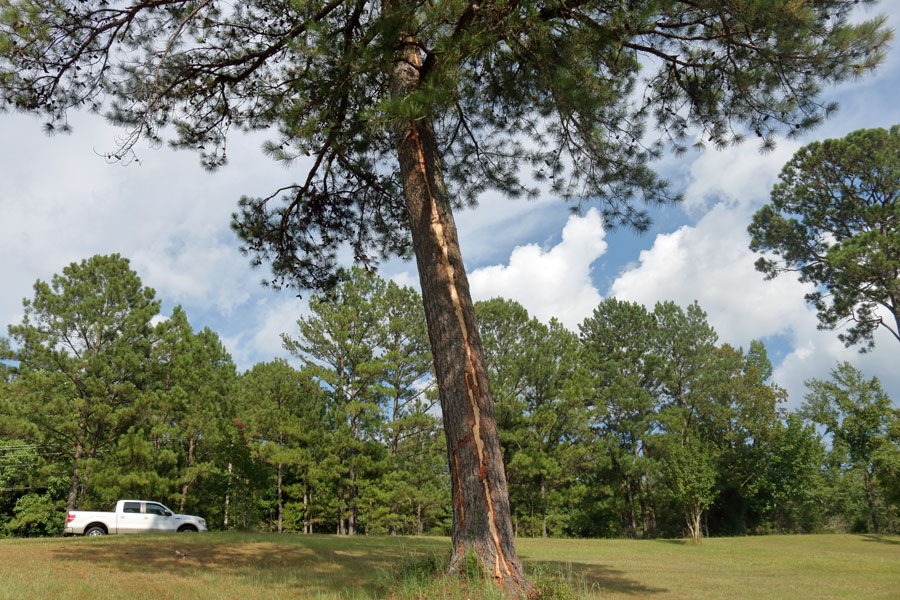
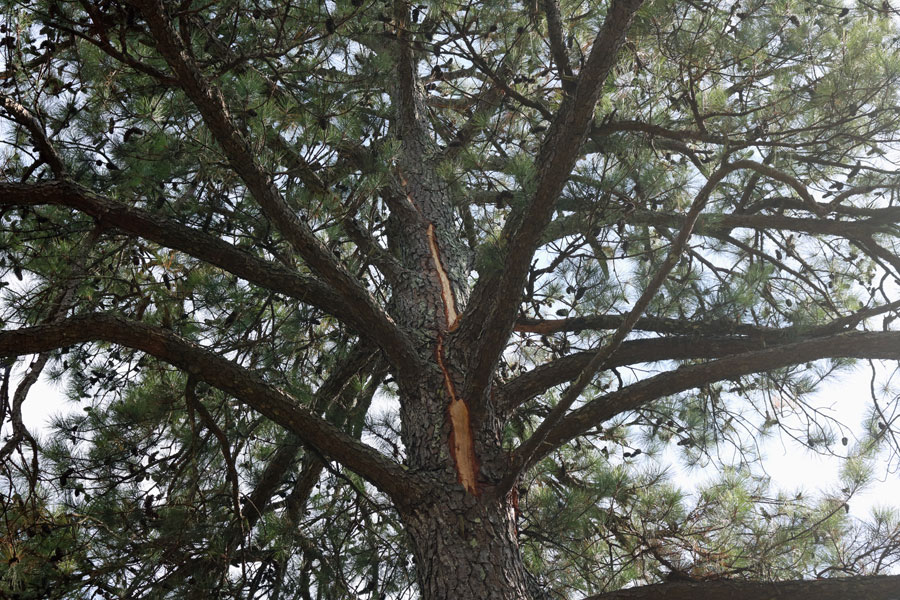
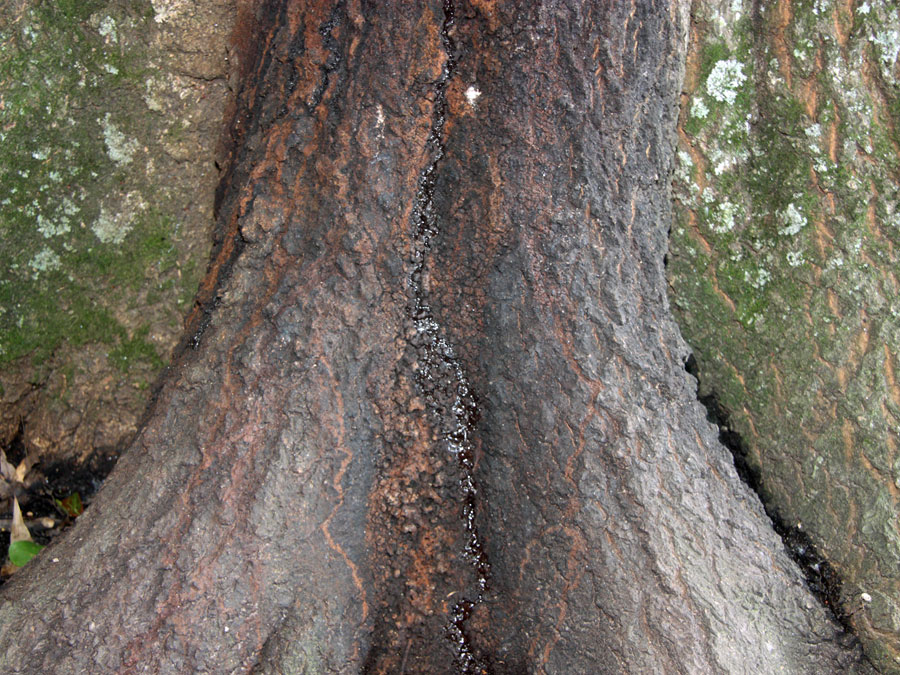
When lightning strikes a tree, most of the electrical current takes the path of least resistance. The area just under the tree bark contains moisture in the form of sap and water. This area is more conductive than the bark on the outside of the tree. The path that lightning current took will often be depicted by missing bark on the tree.
For Maximum Resolution, Click on the Body of the Picture.
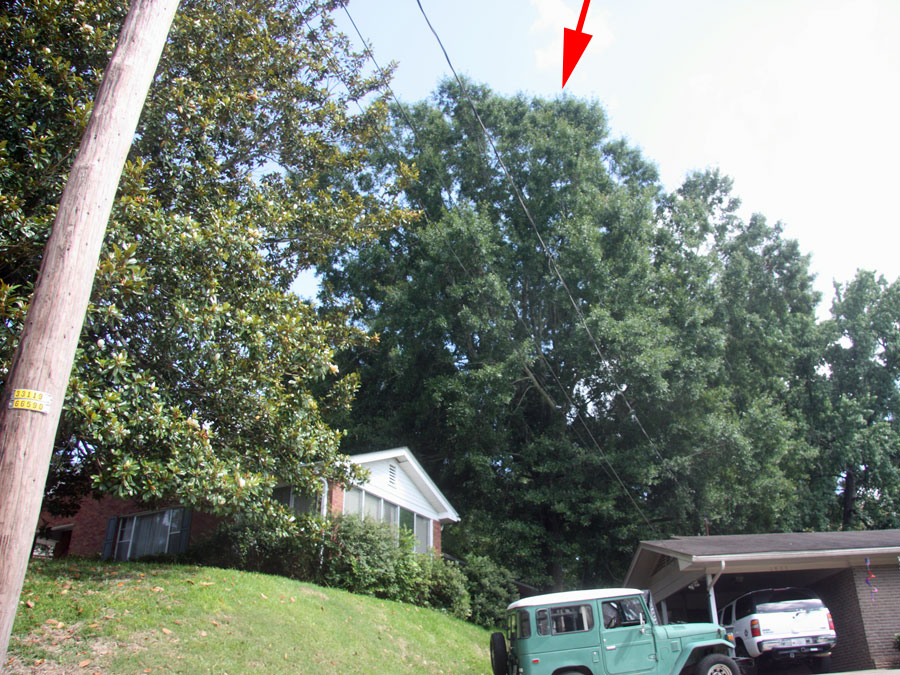
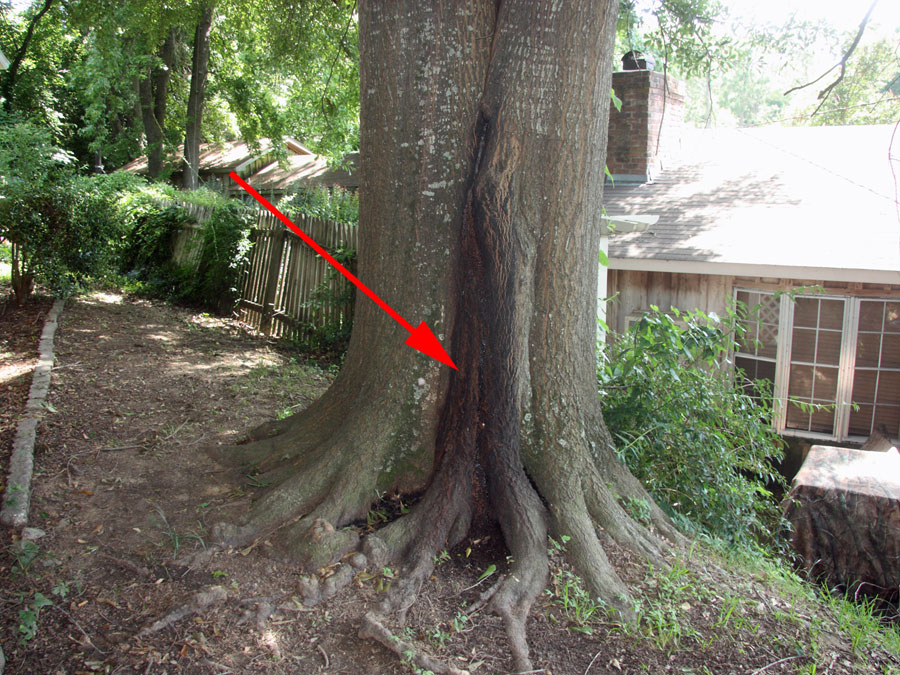
On 2014-06-09">June 9, 2014 at approximately 3:00 AM, lighning struck a large oak tree at the side of my mother's home: 1437 Westeria Drive, Vicksburg, MS 39183. Athough I could not find any phyical damage in the top of the tree, at the tree trunk were burned bark and boiled tree sap. The only items damaged inside the home were AT&T Internet and televison boxes (U-Verse).
For Maximum Resolution, Click on the Body of the Picture.
Lightning damaged the AC condenser, the furnace, a refrigerator, a TV and other appliances in this home. The only physical signs of lighting damage were to the AC condenser and the furnace.
For Maximum Resolution, Click on the Body of the Picture.
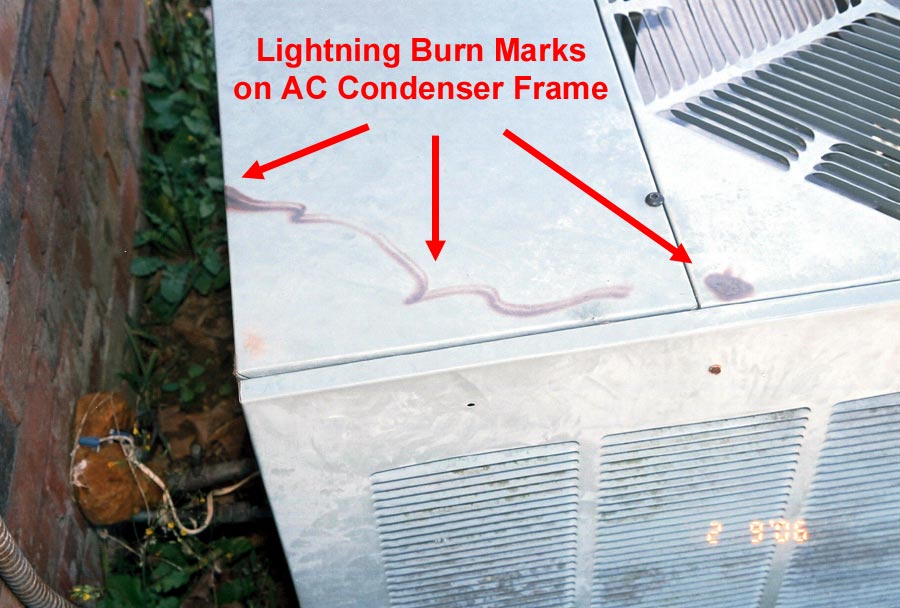
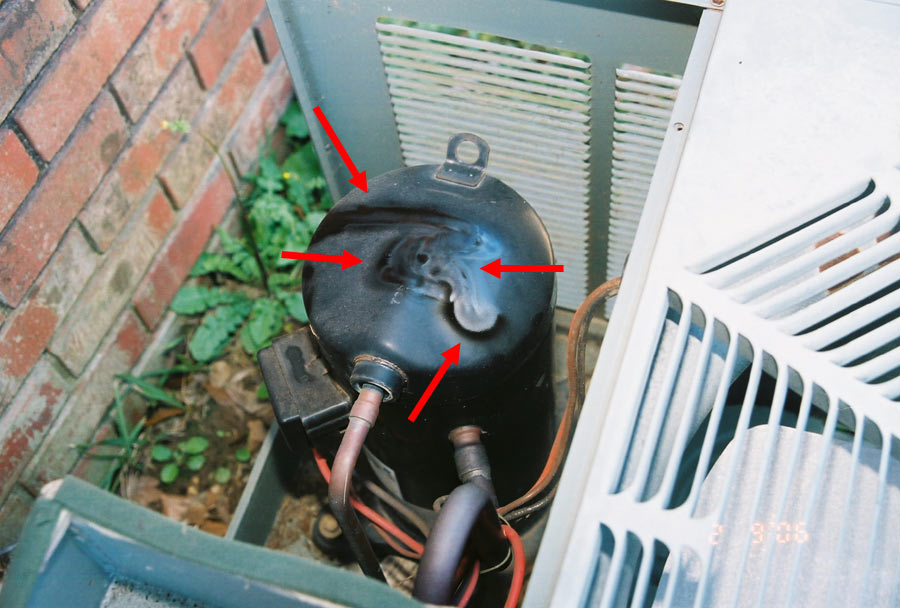
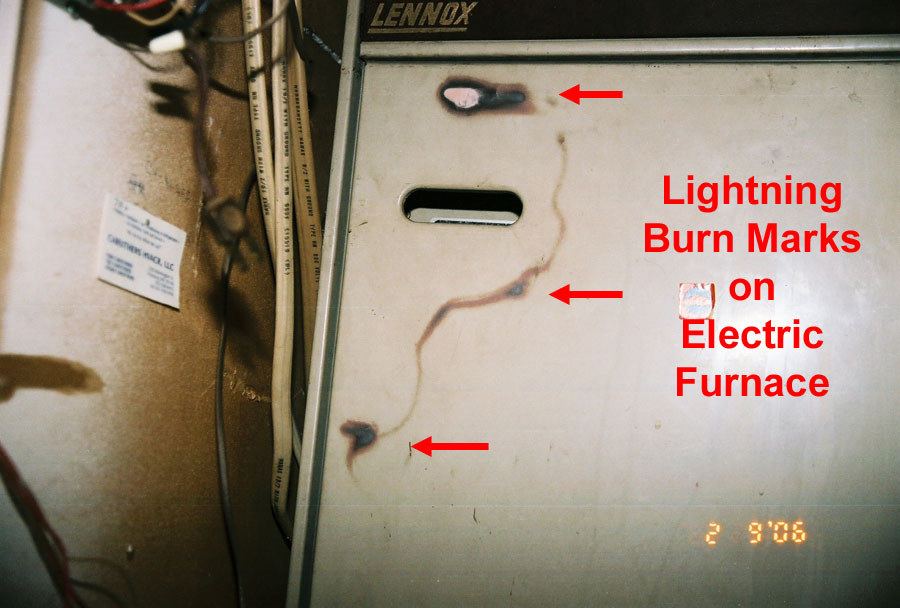

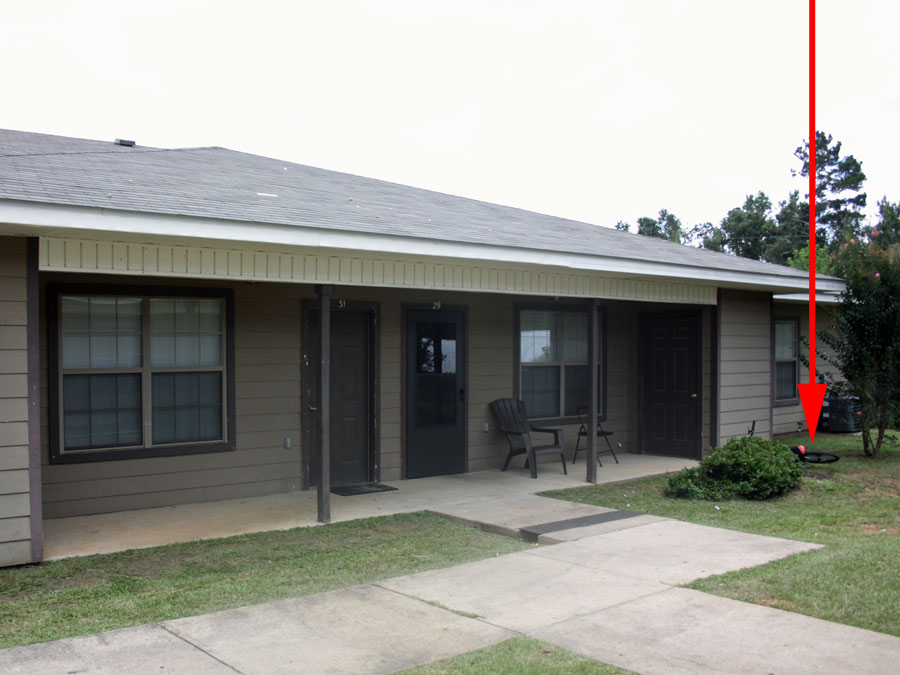
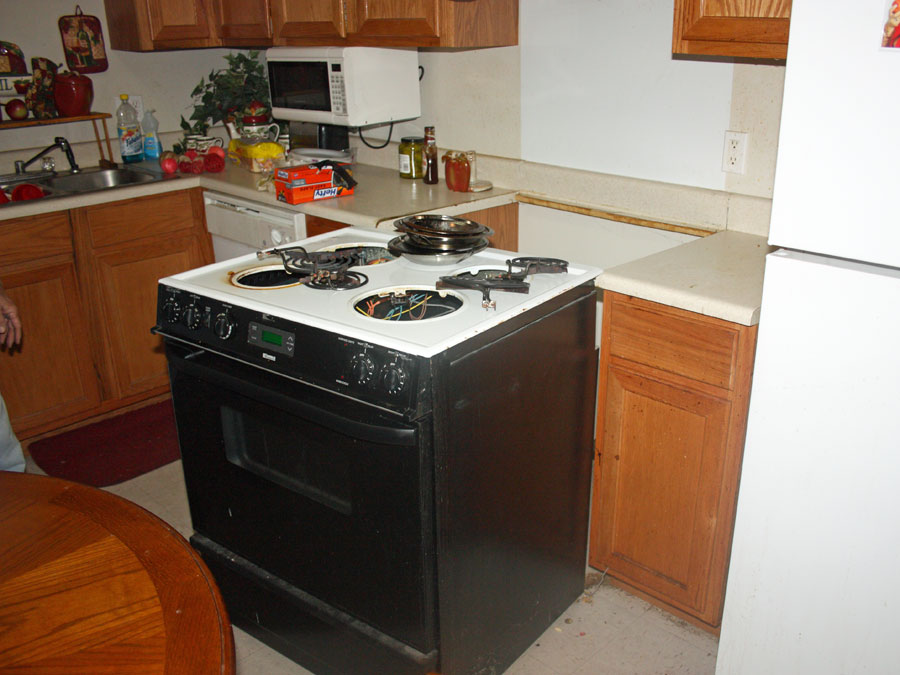
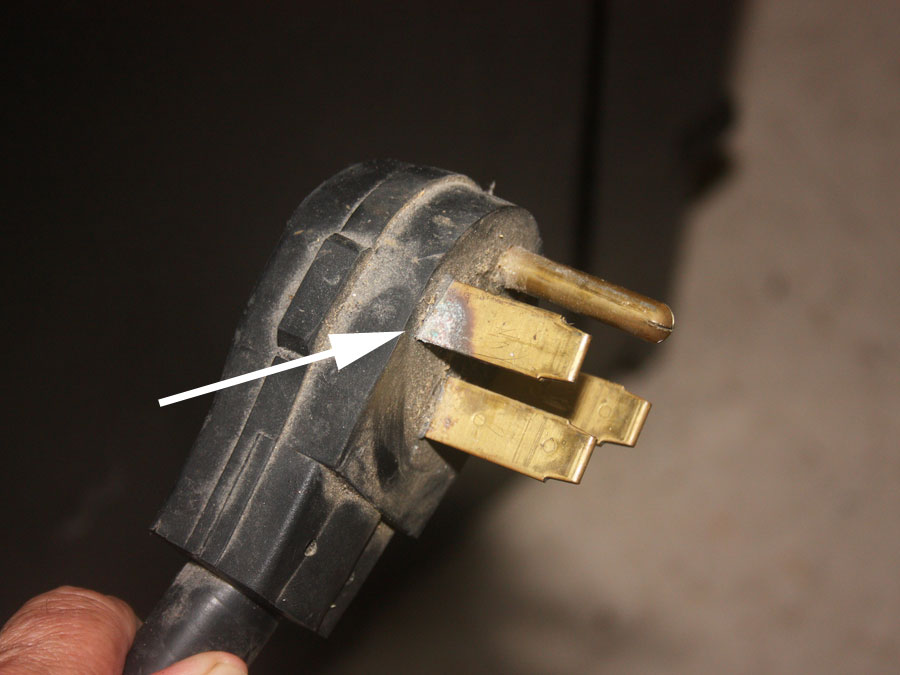
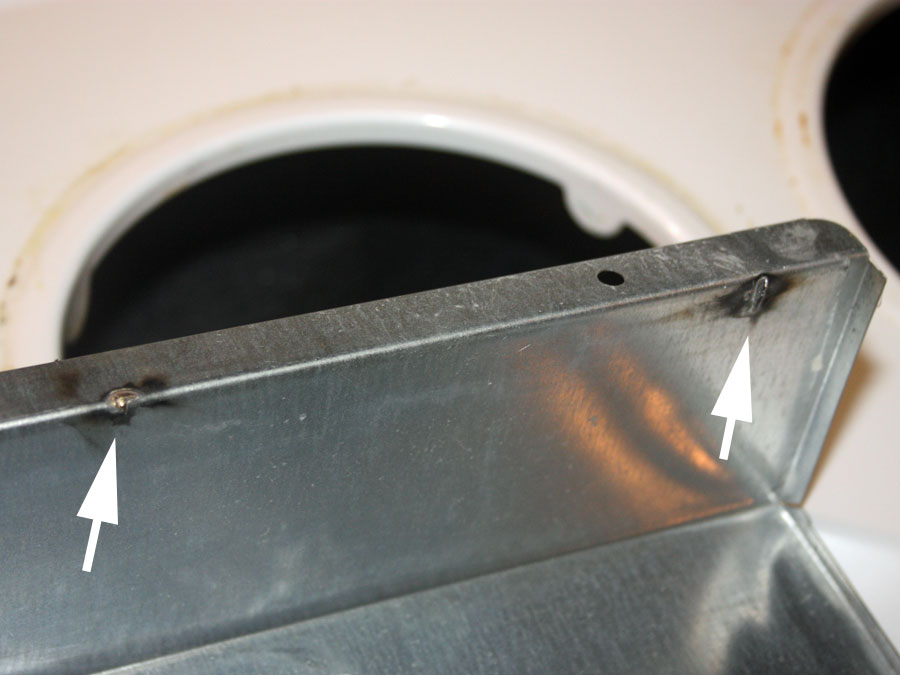
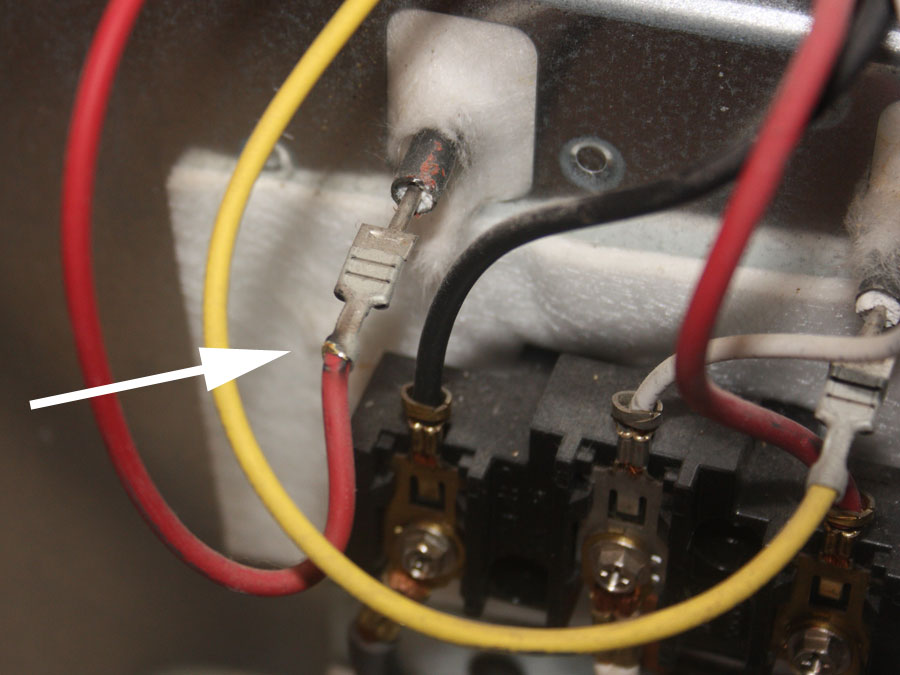
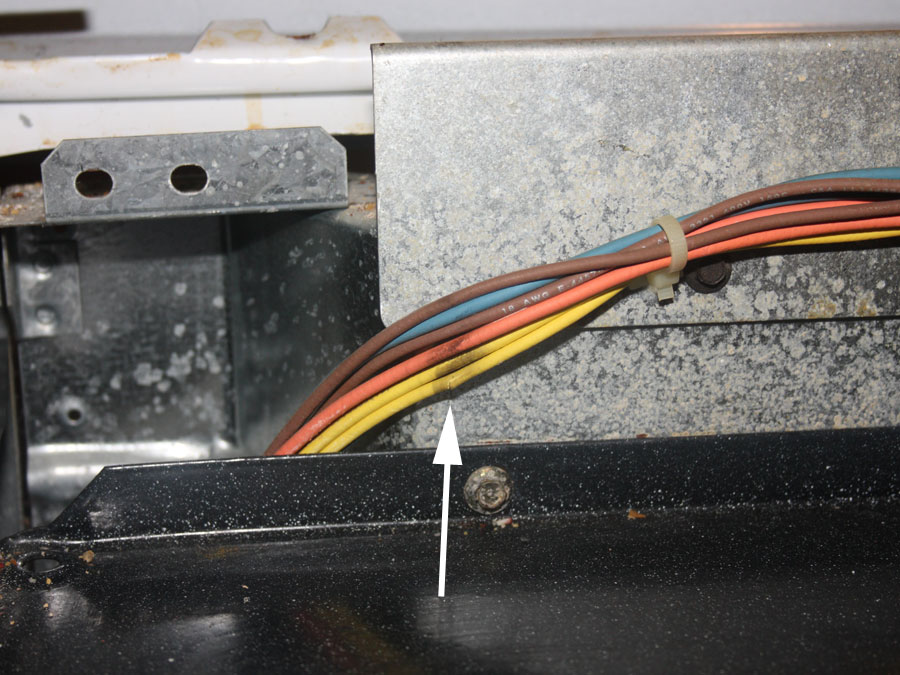
Lightning struck the ground and indirectly damaged the kitchen range, washing machine and television set. There were signs of lightning damage to the ground and the kitchen range.
For Maximum Resolution, Click on the Body of the Picture.


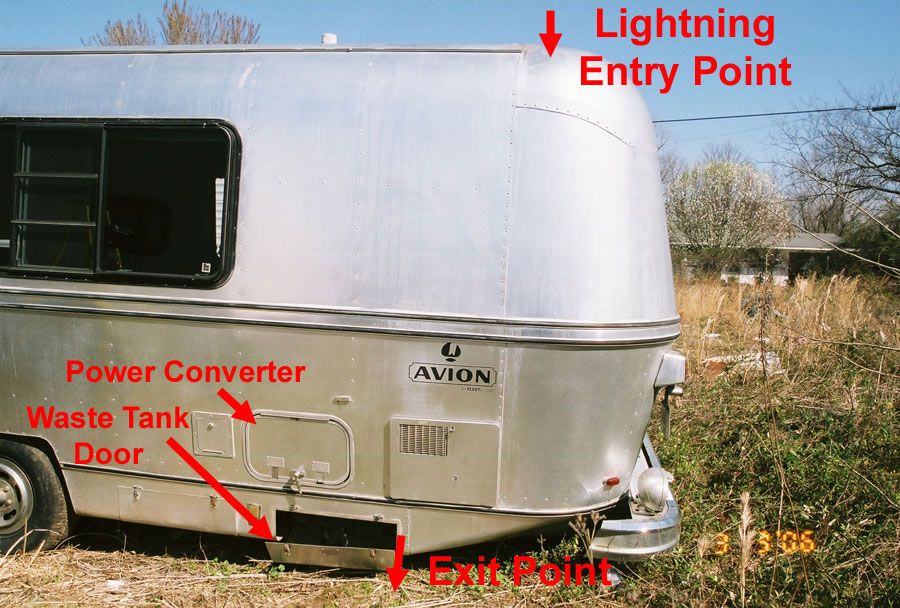
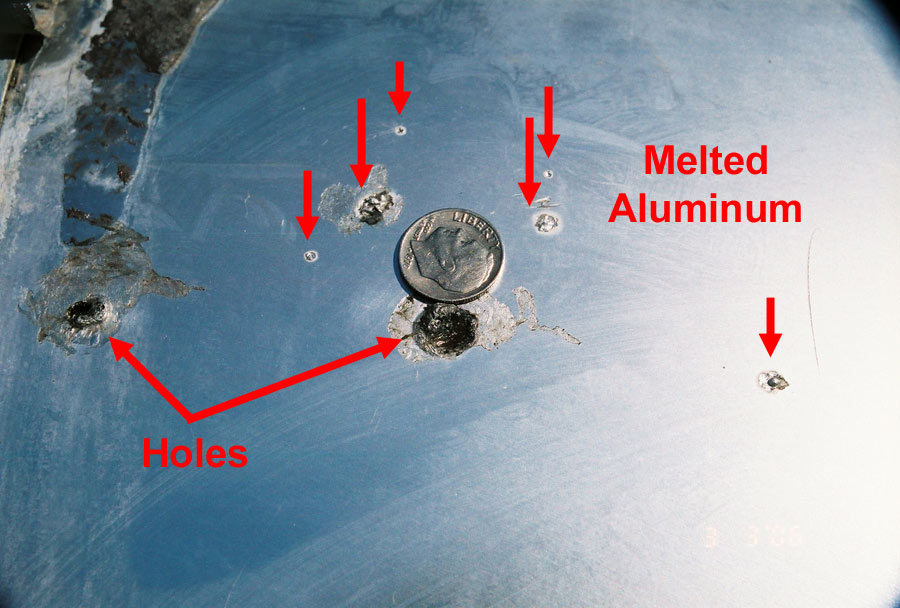
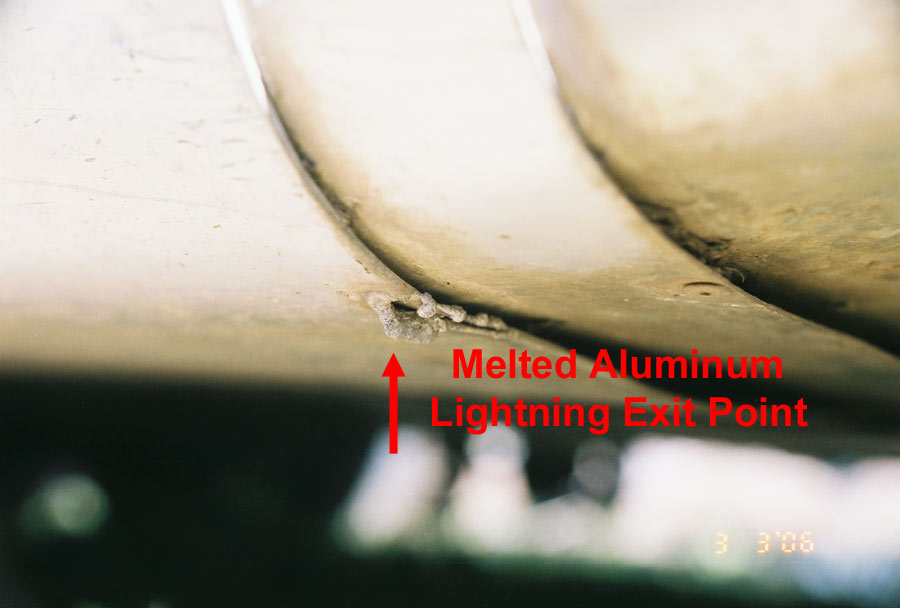
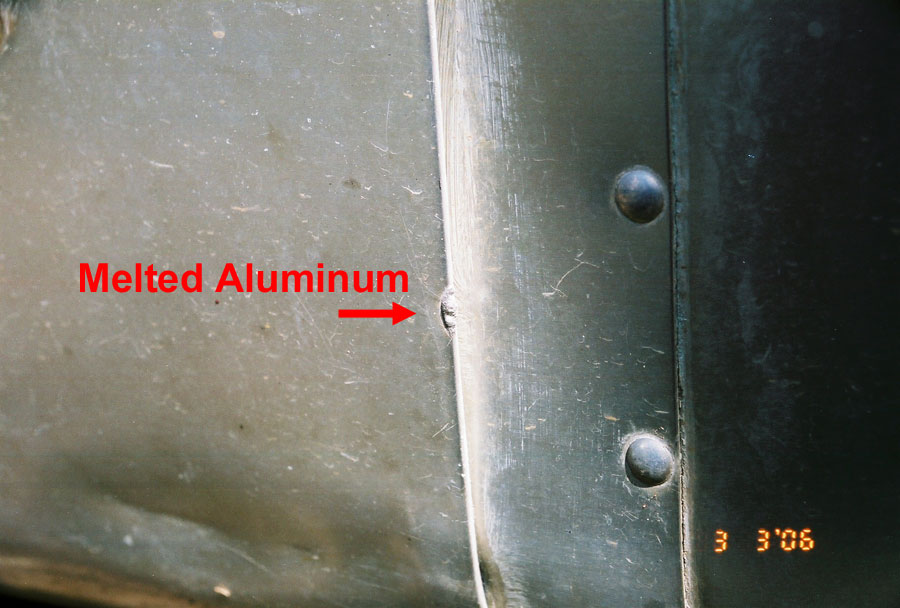
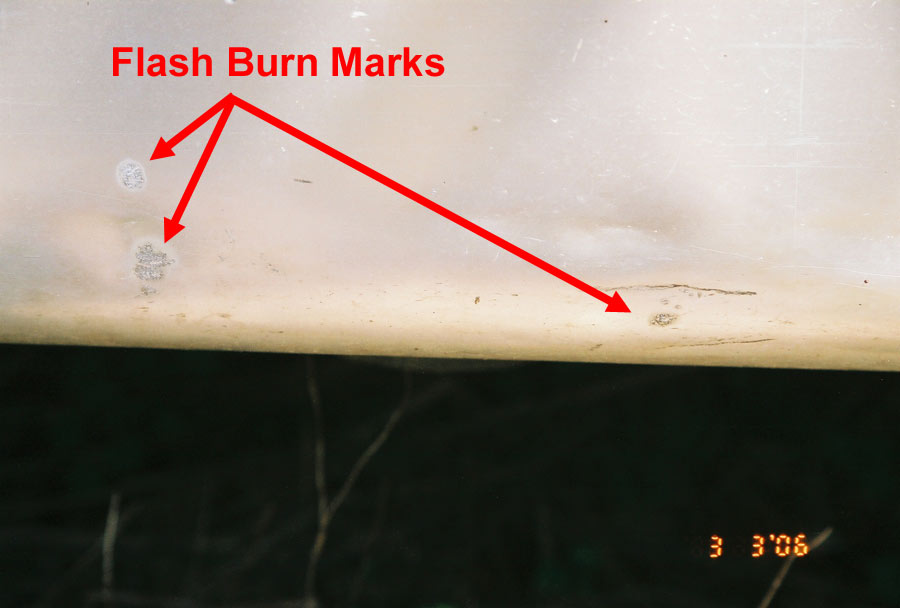
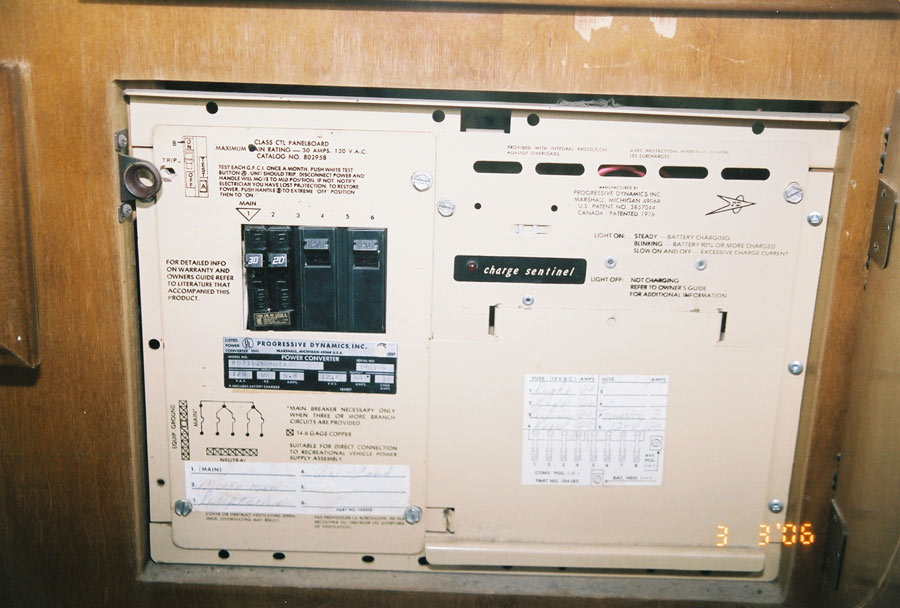
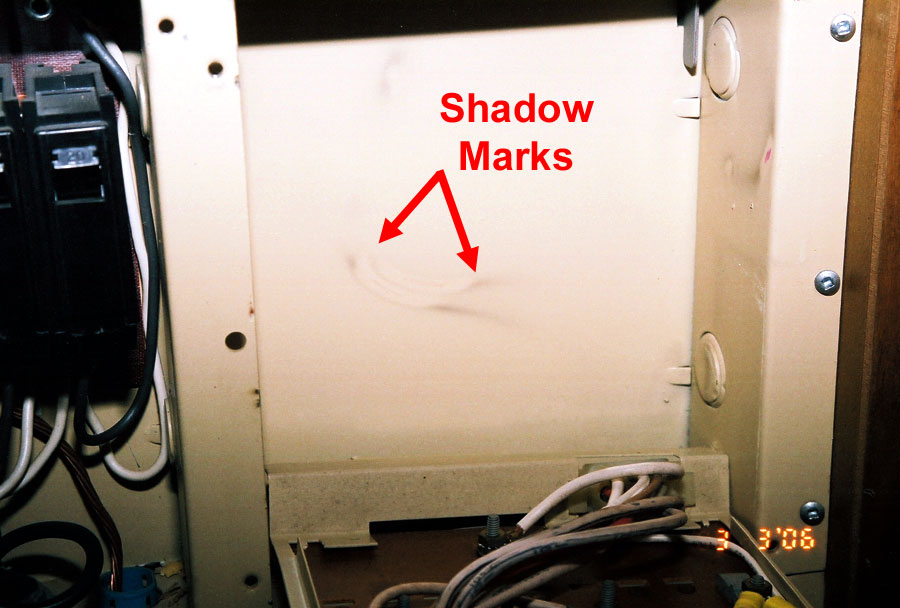
This 1981 Avion Camper was parked under a tree. The tree was hit by lightning, and lightning flashed from the tree to the camper. Two holes, about half the size of dime, were present on the roof where lightning flashed to the camper. There was also melted aluminum at the waste tank door where the lightning current exited the camper. In line with where the lightning entered and exited the camper, is the door to the power converter. Although the power converter did not take a direct hit, it was damaged by induced lighting current. The changing magnetic field associated with lightning can induce electrical currents into nearby wires without coming in contact with then. Because the frequency of the lightning current is much greater than 60 Hz, the majority of it travels on the outer edge of the wire. Electrical engineers refer to this as the skin effect. High electrical currents induced into wires can heat the wire enough to change the color of the wire insulation, or it can melt or tear the wire insulation.
For Maximum Resolution, Click on the Body of the Picture.

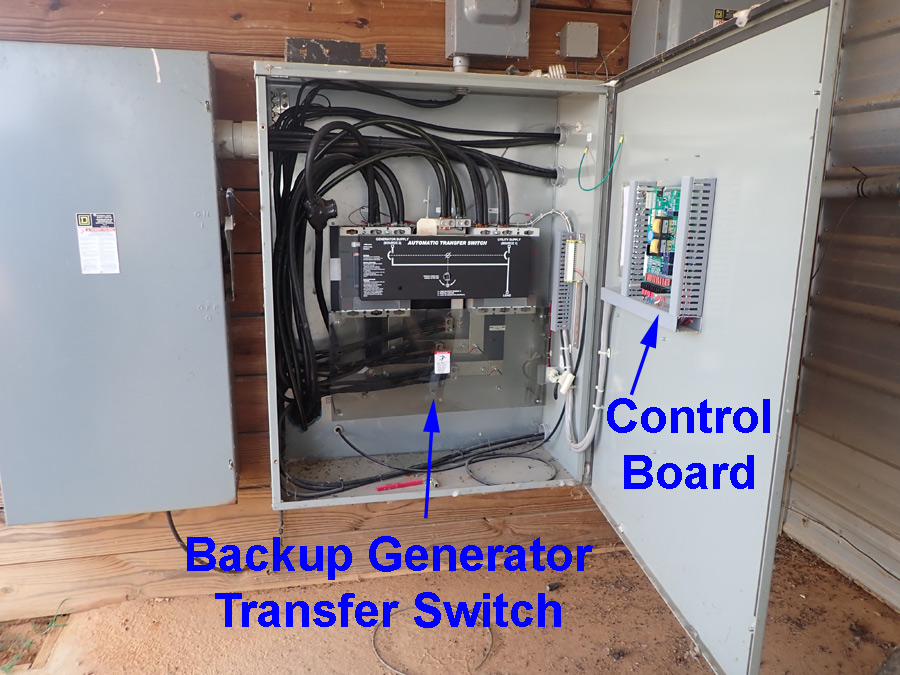
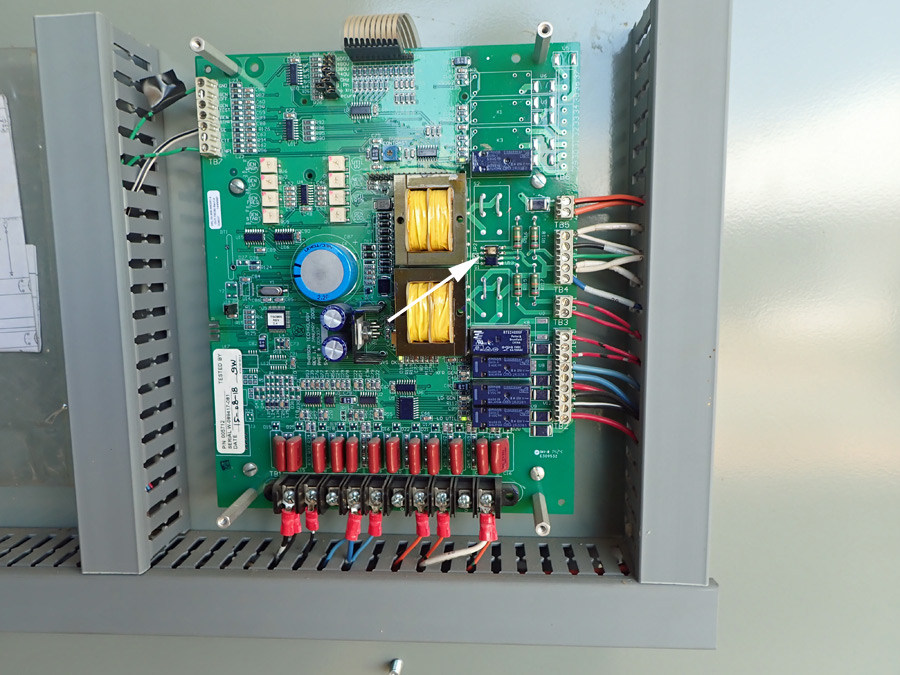
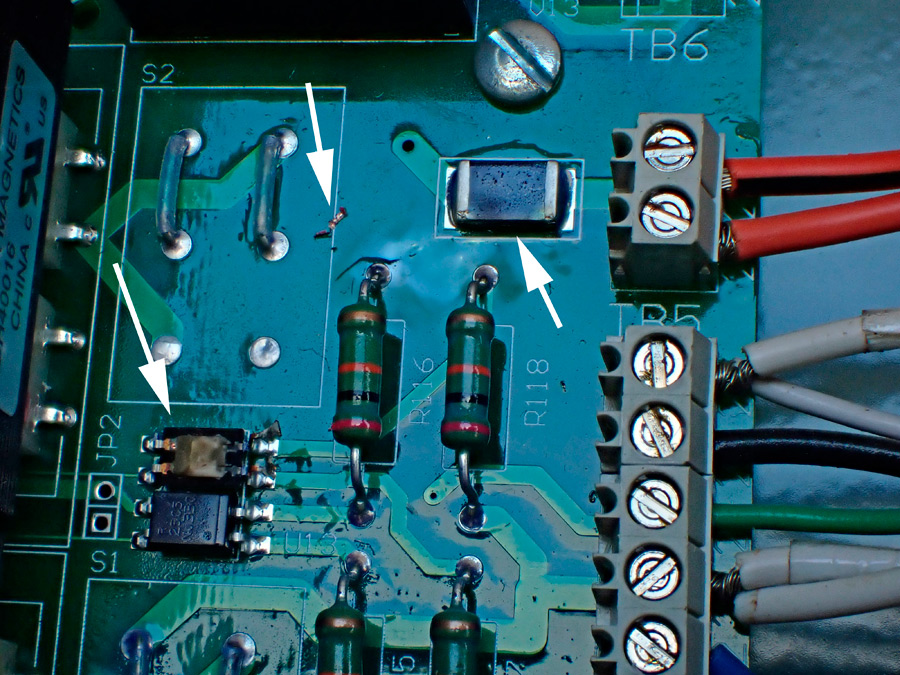
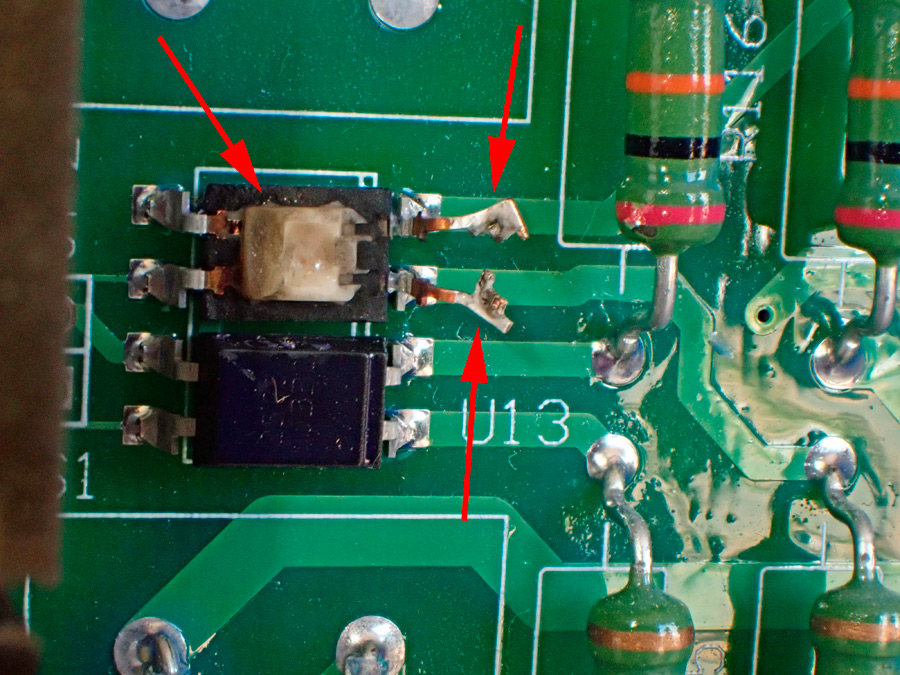
Lightning Damaged the Control Board on a Transfer Switch for a Backup Generator (Case No.: F21-036).
For Maximum Resolution, Click on the Body of the Picture.
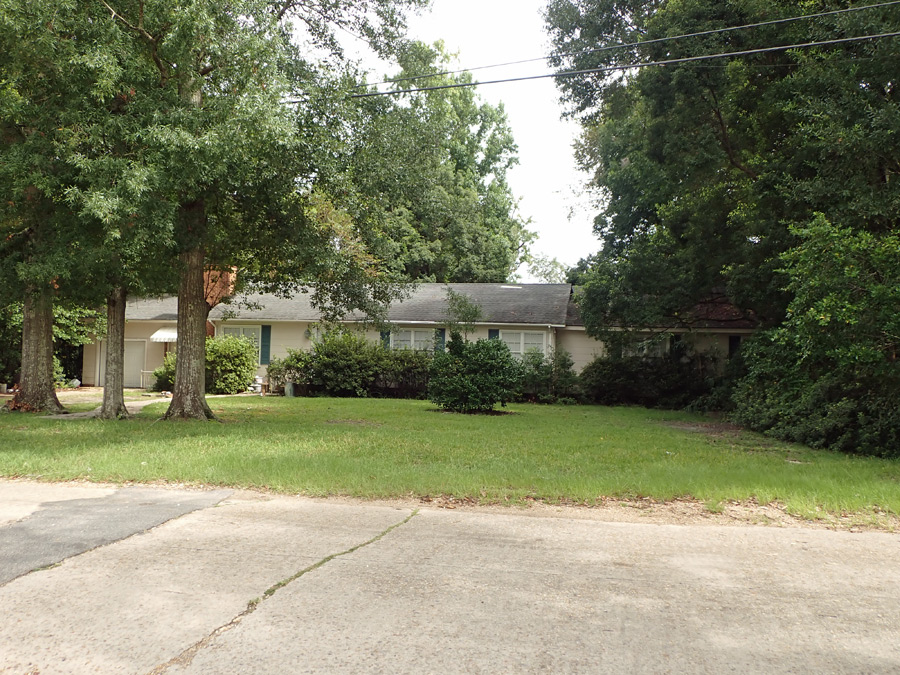
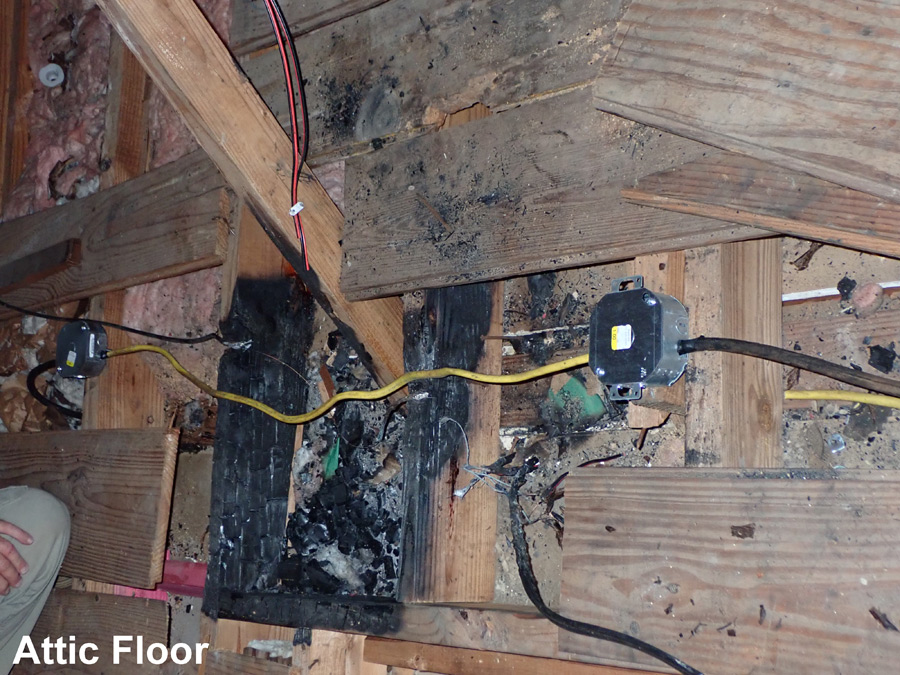
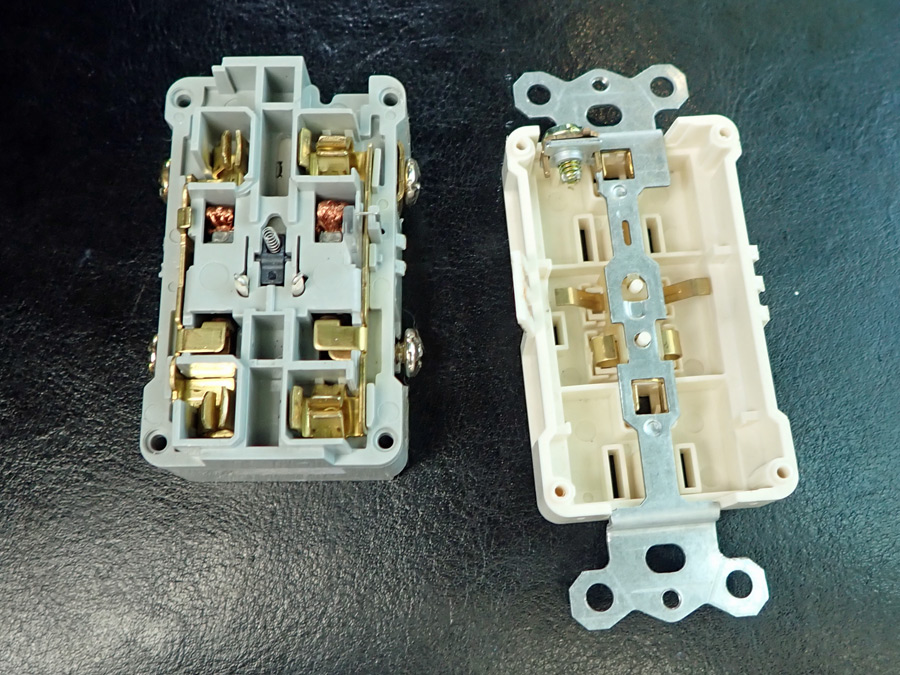
Lightning current entered the electrical system this home and caused a small attic fire (F21-047). The home was not properly grounded. Had the residents not been home and immediately called the fire department, this could have been a major fire. By the time of my inspection, an electrician had already made repairs. He left behind a Ground-Fault receptacle that he replaced.
For Maximum Resolution, Click on the Body of the Picture.
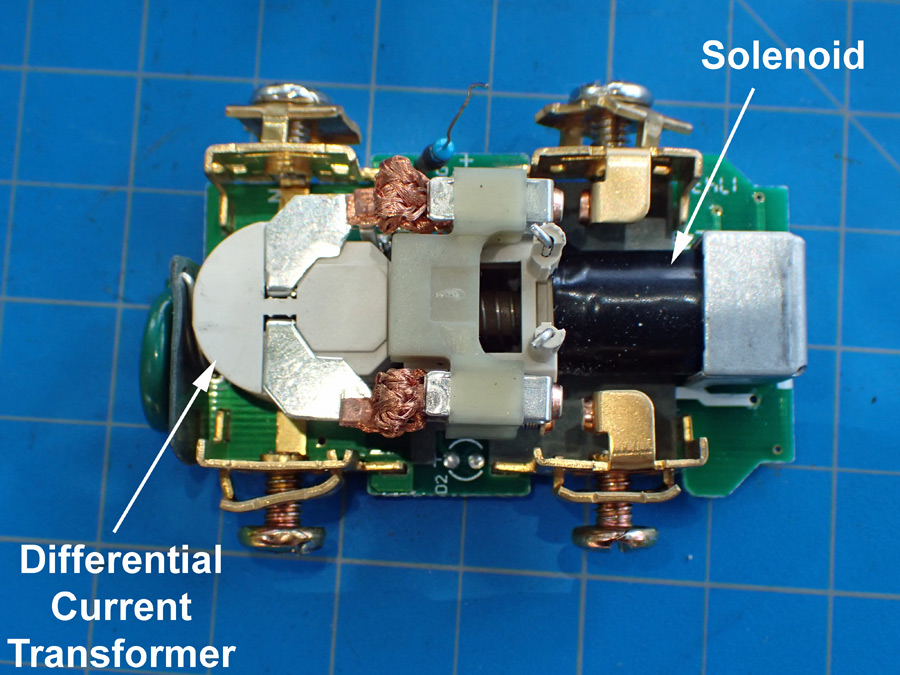
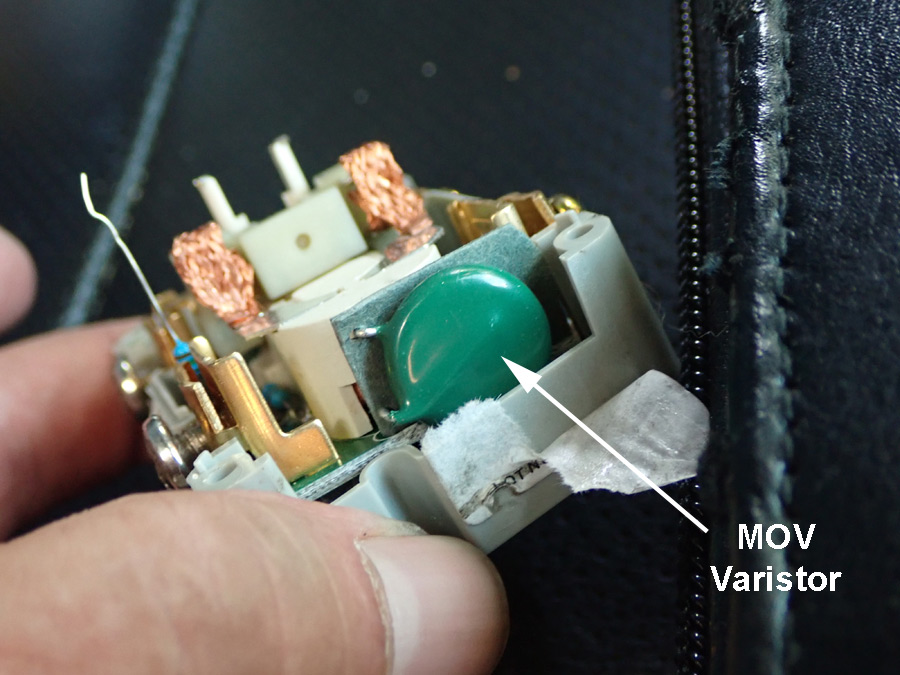
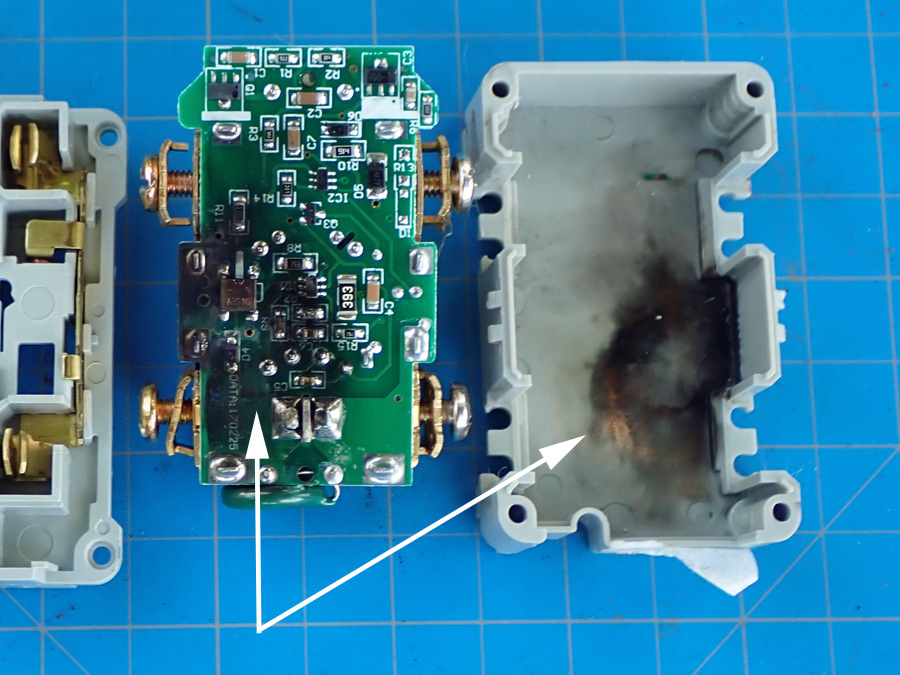
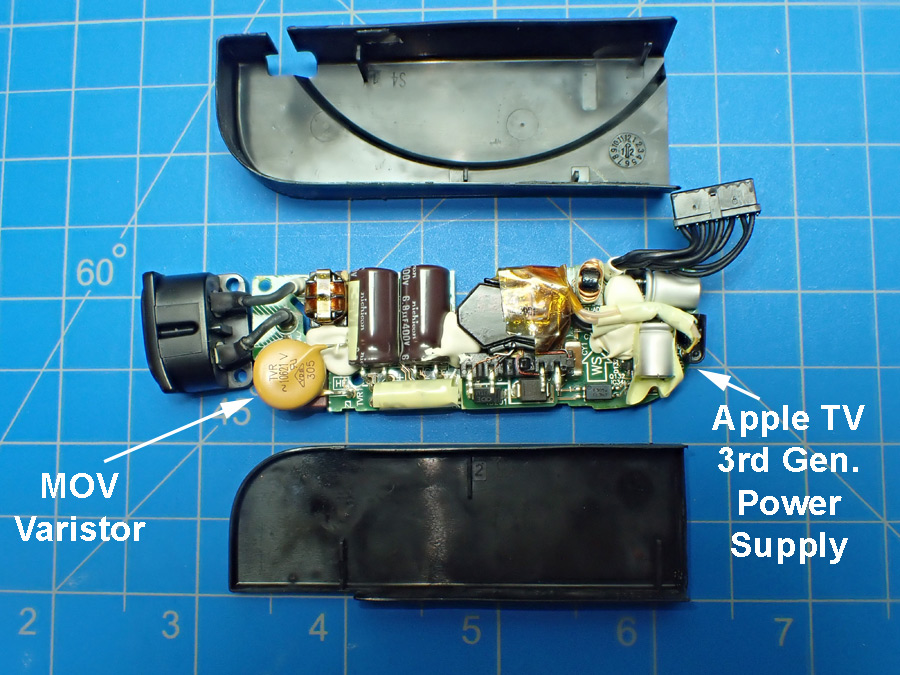
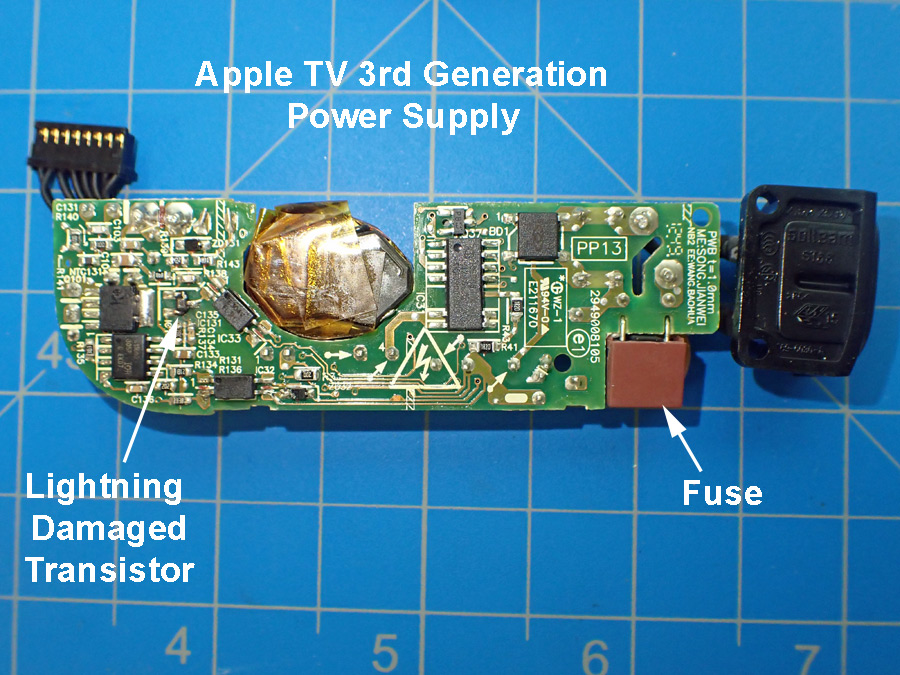
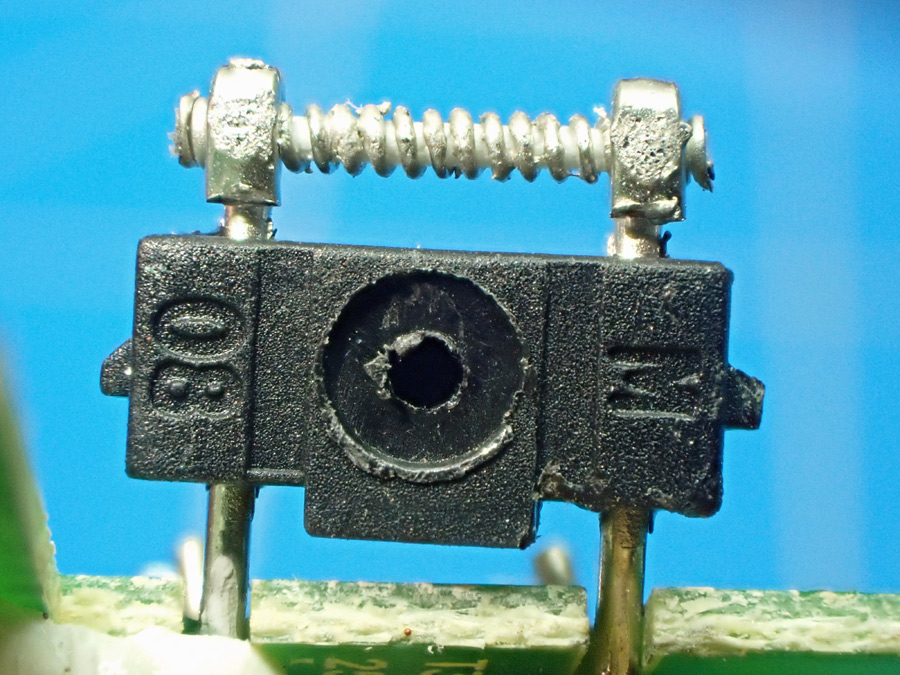
Lightning damaged the direct current (DC) power Supply in an Apple TV (Case No.: F19-025). The Metal Oxide Varistor (MOV) was NOT damaged, and the fuse did NOT melt.
For Maximum Resolution, Click on the Body of the Picture.

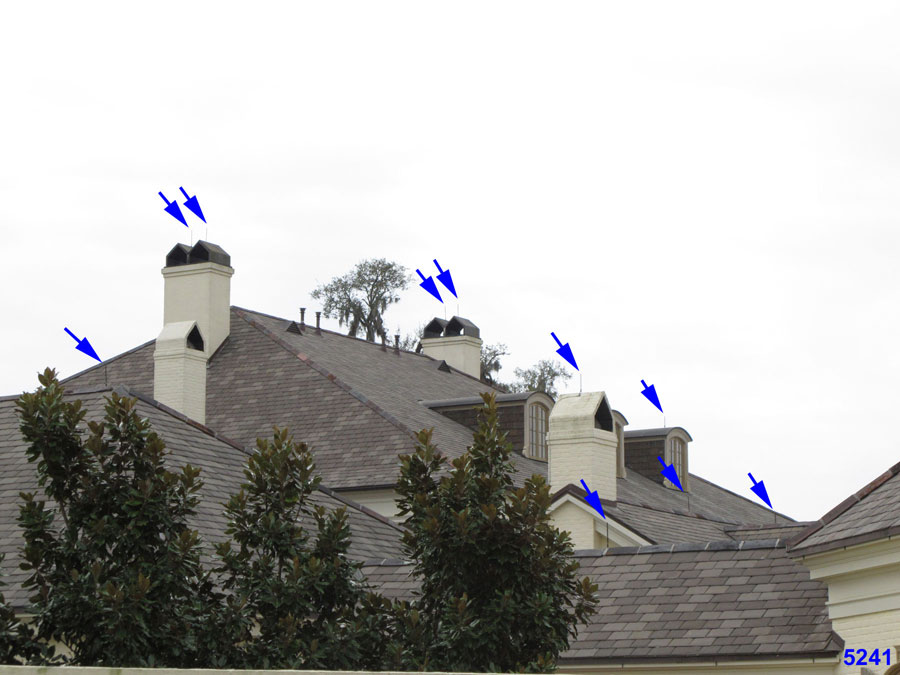
In areas with frequent lightning, a lightning protection system should be considered. A lightning protection system consist of lightning-rods (air terminals) and equipotential bonding.
NFPA 780: Standard for the Installation of Lightning Protection Systems
For Maximum Resolution, Click on the Body of the Picture.


© Copyright Dr. Ray Franco, PhD, PE | 2006-2021. All rights reserved.